You're hurting your dog if you aren't doing any of these simple things, according to vets & trainers
These easy swaps can seriously improve your dog’s life.

Your pup is part of the family, so you obviously want the best for them. Helle Brandrup, in-house veterinarian at Neurogan Pets, recognizes that many dog-parenting mistakes aren’t always intentional. "What many pet owners fail to realize is that most accidental harm to dogs [...] does not come from the lack of love, but from a lack of understanding,” she says. To help your furry friend feel their best, Mic connected with veterinarians and canine trainers for advice. These finds can seriously improve your dog’s routine — because who doesn’t thrive when their furry friend is living their best life?
Editor’s note: Always consult with your own veterinarian before implementing new dietary changes or introducing new training equipment for your dog.
01Implementing a paw washer after walks
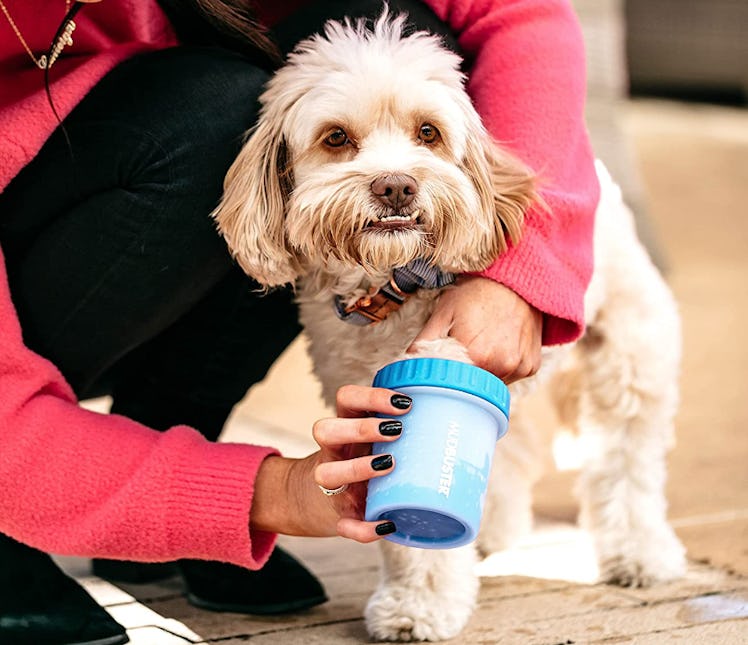
Have an allergy-prone dog? Dr. Ambika Vaid, a veterinarian and advisor to Badlands Ranch, says this paw-washing product “is great for cleaning paws after walks, and preventing redness and skin inflammation from seasonal allergies.” The cleansing tool comes in three sizes, so you can get the perfect fit for your dog, and the portable washer couldn’t be easier to use. Just add water, insert your pup’s paw, twist the tool, and dab dry. The silicone bristles are ideal for removing dirt and mud, and the enclosed design is great for minimizing mess.
02Using stainless steel bowls to reduce microplastics exposure

If you’ve been using plastic bowls, it’s time to consider a stainless steel option instead. Dr. Amanda Nascimento, DVM, PhD at NHV Natural Pet says, “As a veterinary toxicologist, I have seen a huge growing awareness around microplastics. It’s still an emerging area of research, and much more work is needed to fully understand their long-term effects. However, I still recommend swapping plastic bowls for stainless steel or ceramic ones.” These budget-friendly stainless steel bowls come in a set of two and each one holds over 28 ounces of food or water. Plus, the nonslip rubber base helps to keep the bowls in place so your pup can’t move them around.
03Making sure your pup gets mental exercise as well as physical

You wouldn’t skip your pup’s daily walk, but are you also paying attention to the mental component of caring for them? Nicole Ellis, a certified professional dog trainer at Rover, says, “Physical exercise is great and necessary for a dog, but it’s only half of the equation. Your dog, an intelligent creature, also needs mental exercise.” To limit things like excessive barking and chewing, Ellis recommends using a mentally-stimulating puzzle toy. This snuffle mat is a great option. Made from durable materials, the toy encourages dogs to remove the stuffed carrots from the base, and you can hide treats in the sections for a tasty challenge. Plus, the pieces are all machine washable, so the toy is easy to maintain.
04Utilizing a ThunderShirt to minimize anxiety
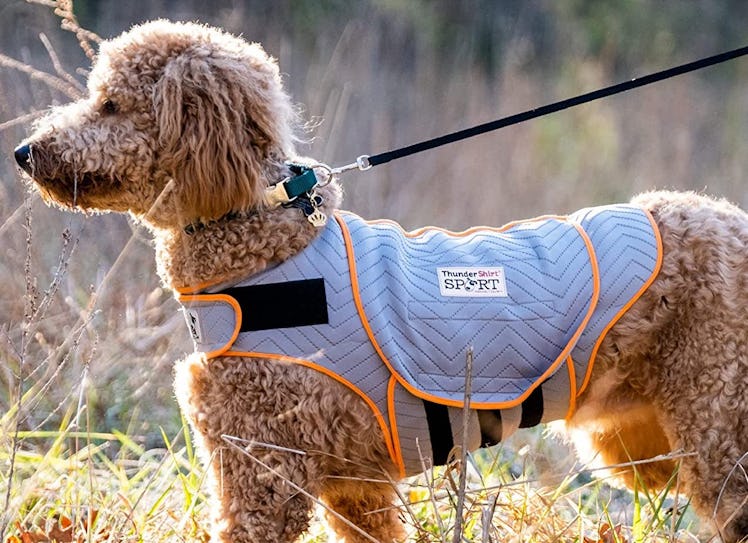
Dr. Stephanie Liff, vet advisor to dog nutrition and wellness company Spot & Tango, says that it’s not uncommon for dogs to experience anxiety, but you can help them manage it. “I like the ThunderShirt, which is a tight-fitting garment that works similarly to a swaddle. Many dogs find consistent compression calming,” Dr. Liff says. The ThunderShirt is available in seven sizes and is designed to be breathable and machine washable.
05Adding in puzzles to help tire your dog out
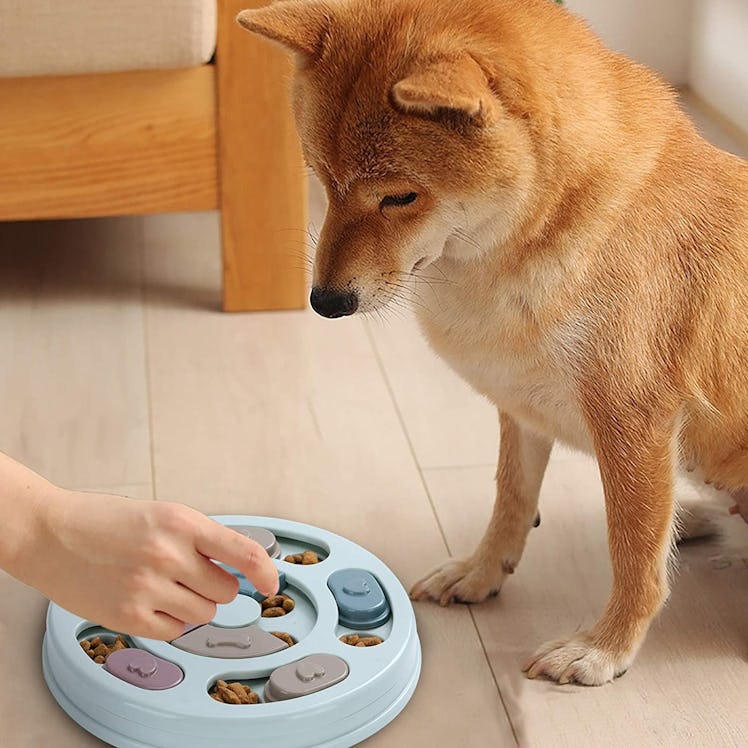
One of Rover’s certified professional dog trainers, Nicole Ellis, says “Mental stimulation is a great way to tire a dog out, often faster than exercise would.” And luckily, it doesn’t need to be complicated. Ellis explains, “For a dog, it’s mostly just simple, fun games with their owner, like puzzle toys.” This fun puzzle feeder is an interactive take on a food bowl, with plenty of hiding spots and moveable lids for tucking away treats. The design also encourages slow eating for better digestion.
06Grooming regularly with a slicker brush

To help prevent mats and keep fur healthy, get your hands on a quality slicker brush. Dr. Erin Schroeder, DVM, and Wellness Pet education partner says, “If pet parents can stay consistent with brushing just a few times a week, it goes a long way in reducing shedding, keeping the skin healthy, and making grooming feel like an easy routine rather than a chore.” This brush option is designed to be skin-friendly, and it has a self-cleaning button that lets you quickly dispose of fur buildup.
07Creating a dedicated resting area

Giving your pup a calm resting spot is key for creating a sense of security, explains Dr. Ambika Vaid, an integrative veterinarian and advisor to the pet nutrition brand Badlands Ranch. Create that security for your own pup with this memory foam dog bed. It’s available in dozens of colors and sizes, and the two layers of foam are great for adding comfort and relieving pressure.
08Switching to a slow feeder

Dr. Erin Schroeder, DVM, and Wellness Pet education partner likes slow feeders, because they can “support better digestion and mental stimulation.” This bowl is both a slow feeder and made from stainless steel, so it’s designed to be rust resistant and dishwasher safe with a nonslip base to keep it steady.
09Taking ‘decompression walks’ with a long leash
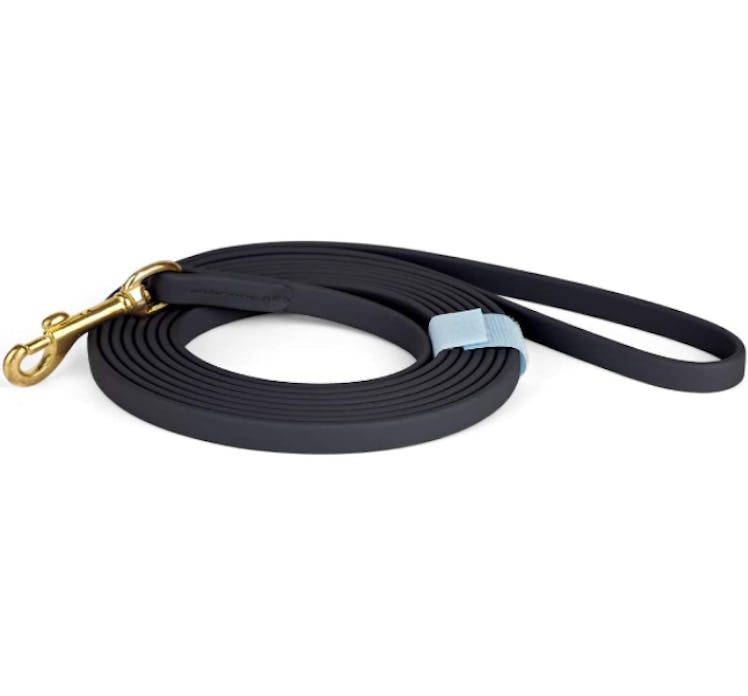
Available in multiple widths, this flexible dog leash is the perfect training companion. Helle Brandrup, in-house veterinarian at Neurogan Pets and business expert at Neurogan Health, says that many dogs are trained to over-socialize, so it’s key to incorporate “decompression walks” that aren’t all about playing. She says you want a leash that’s at least 15 feet long. “This allows [dogs] to explore without the constant tension of a shorter leash,” she says. Featuring a waterproof coating, this leash is a great option because it’s designed to stay odor-free, and it has solid brass hardware that’s long-lasting and rustproof.
10Using enzymatic toothpaste for better brushing

Dr. Ambika Vaid, a veterinarian and advisor to Badlands Ranch, explains that C.E.T enzymatic toothpaste is a great option for brushing your pet’s teeth. Dr. Vaid says, “The flavored options help your pet enjoy it rather than shy away from it.” This kit includes a double-sided brush with soft bristles, a finger brush, and poultry-flavored toothpaste, so you have everything you need to start removing plaque and tartar from your dog’s mouth.
11Getting them a calming collar to help with destructive behaviors

If you have an anxious pet who struggles with negative behavior, a pheromone collar like this one can be a game changer. “[It] helps to reduce mild anxiety that may be inhibiting certain dogs' ability to respond well to training,” says Dr. Marissa SanFilippo, a vet for Small Door Veterinary. This collar uses a pheromone that is similar to what a nursing mom dog releases when she’s feeding her puppies, and it’s designed to last for up to a month.
12Adding a nutrient boost to plain kibble

Helle Brandrup, a veterinarian at Neurogan Pets, advises pet owners to consider adding goat’s milk to amp up the “nutrients, proteins, and electrolytes” in your dog’s kibble. It’s always a good idea to check in with your own vet, but if you get the green light, this goat milk powder is a convenient, shelf-stable option. You can sprinkle it dry over the food or mix with warm water to serve.
13Changing up toys to keep playtime interesting

Dr. Amanda Nascimento, DVM, PhD at NHV Natural Pet recommends “interactive toys like puzzle toys and scent-based games to really stimulate [dogs’] minds.” This intermediate-level puzzle feeder is great for providing mental enrichment, since it encourages dogs to solve the maze to access the treats tucked inside. Just make sure you’re varying how often you use it, because Dr. Nascimento recommends “rotating their toys regularly [to help] keep things interesting.”
14Training them with tools like treat-dispensing bags

Iryna Smyrnova, a veterinarian at Meowoff says, “One thing I wish more pet owners would take the time to do is teach their dog basic obedience skills, including ‘leave it,’ ‘stay,’ and loose-leash walking.” Luckily, there are plenty of tools to help with training, such as this versatile treat-dispensing pouch. Featuring reflective stitching that’s great for low-light conditions, the drawstring pouch can hold up to 2 cups of treats or kibble for you to dole out during training lessons and walks. It also has a zippered pocket for your valuables and a spot for poop bags.
15Keeping your dog’s nails neat & tidy
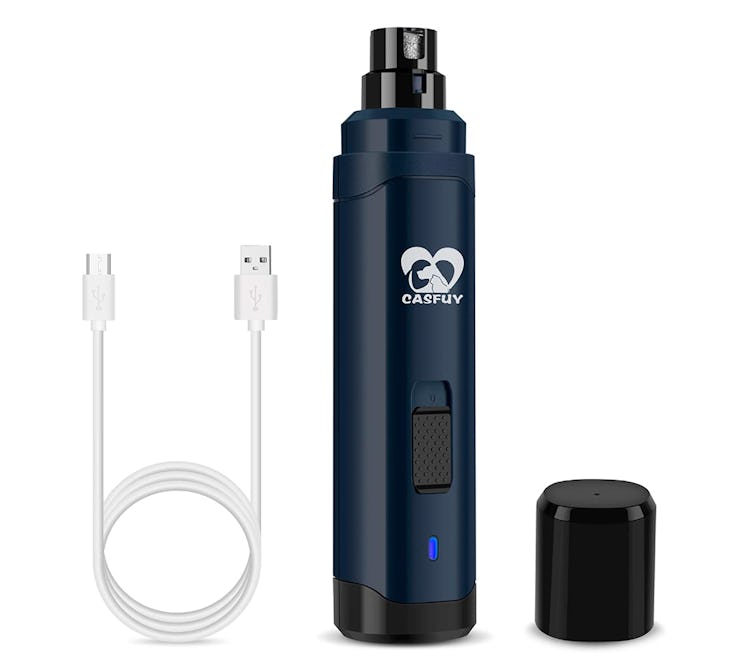
If you want to stay on top of grooming, Meowoff veterinarian Iryna Smyrnova recommends using a grinder to maintain your pup’s nails. “Dulling your dog's nails regularly helps prevent straining your dog's joints and also prevents postural deformities caused by long nails,” she says. This grinder features a rechargeable battery with two speeds, and it’s made to operate quietly to not add more stress while grooming.
16Making your own treat toys
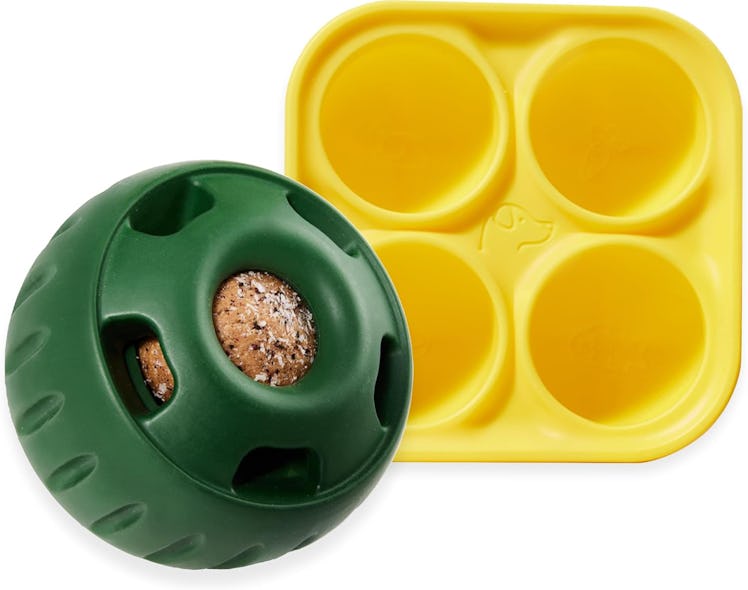
One of Badlands Ranch’s advisors, veterinarian Dr. Ambika Vaid, says “The WOOF Pupsicle [...] [is] great for mental stimulation and getting a dog’s energy out.” The toy is perfect for dogs with sensitive stomachs or allergies, because you can create your own treats for it. Just fill the four molds with everything from wet food to yogurt to peanut butter, and freeze it to use in the accompanying chew toy.
17Getting them a more gentle harness
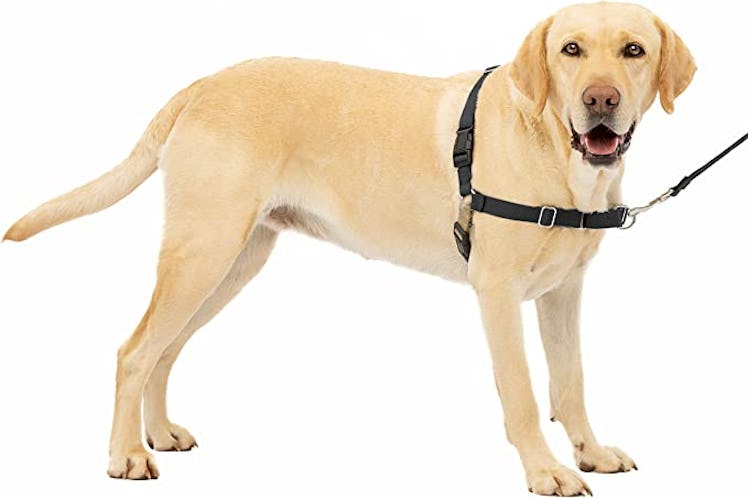
Iryna Smyrnova, a veterinarian with Meowoff, explains that front clip harnesses can be a safer choice for your pup. “[They] distribute pressure along the chest rather than around the neck, which provides less strain on your dog's neck and gives the owner greater control without putting the dog in distress,” she says. This harness comes in nine sizes, is designed to minimize pulling, and is lightweight and breathable for long walks.
18Using the right kind of leash

For better control in a variety of environments, Dogtopia’s Senior Director of Health and Safety, Lorraine Rhoads recommends “a standard 6-foot leash, ideally with two handles.” Rhoads adds, “I strongly recommend avoiding retractable leashes. They encourage pulling, reduce control, and can lead to injuries for both dogs and humans.” This weatherproof leash features a lockable carabiner clip for a secure connection to collars, and you’ll appreciate that it has a 360-degree swivel clasp that can prevent tangles.
19Using hand signals for better communication

Dr. Marissa SanFilippo, a vet for Small Door Veterinary, encourages pet owners to use their hands to communicate more. She explains, “Most dogs respond better to hand signals than verbal commands, so try combining the two, or even begin with only hand signals and add the verbal command later.” Whether your pup has hearing issues or not, this dictionary of signs is a great training companion. The 32-page book is packed full of fun illustrations with fundamental training tips and easy-to-teach hand motions.
20Supplementing prebiotics & probiotics for gut health

To help with gut health, digestion, and immunity, Lorraine Rhoads, Senior Director of Health and Safety at Dogtopia, says you can add prebiotics and probiotics to your pup’s diet. These chews, in addition to the prebiotics and probiotics, also contain fiber, and they’re formulated by veterinarians — but you should also check with yours before giving your pet anything new.
21Using wipes to ward off germs

If you have an active dog or one that spends time engaging in group play, Dogtopia’s Senior Director of Health and Safety, Lorraine Rhoads, says that paw wipes can go a long way to “help maintain hygiene.” These cleansing wipes come in a pack of 400 and feature a textured surface to help remove debris. They’re also designed to be hypoallergenic and are packed with soothing ingredients like aloe, shea butter, and chamomile.
22Preventing infections with a quality ear cleanser
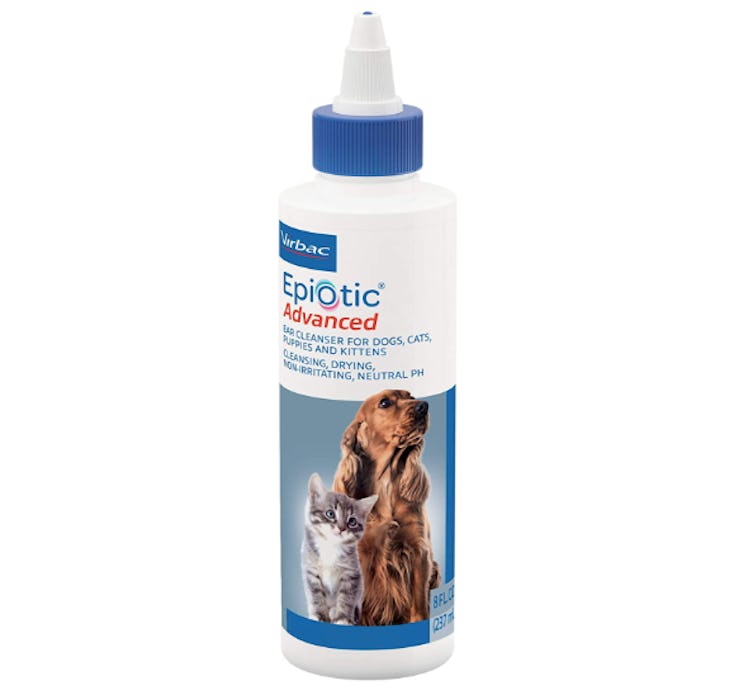
When it comes to grooming, Spot & Tango vet advisor Dr. Stephanie Liff recommends this cleansing ear formula. She says, “A quality ear cleaner [...] [is] helpful for keeping ears clean and preventing infections.” This soothing cleanser is designed for pets with sensitive skin. It helps with removing wax and reducing odors, keeping your pet healthy from the inside of their ear canal and out.
23Buying treat toys to encourage natural chewing behaviors

Lorraine Rhoads, Senior Director of Health and Safety at Dogtopia, recommends durable toys that can be stuffed with food for slow-release play. She explains, “They turn a treat into a mentally stimulating activity and encourage natural chewing behavior, which is both soothing and calming.” This snuffle toy comes in multiple playful shapes, and each ones includes a built-in crinkle layer for extra stimulation. To encourage interactive play, you can tuck your pup’s favorite treats into the 10 built-in pockets.
24Using a lick mat to keep your pup engaged

Does your pup gobble down food too quickly or need extra stimulation? Dr. Stephanie Liff, a New York City-based veterinarian and advisor to Spot & Tango, recommends pairing lick mats with wet food. “A half-frozen portion of canned food on a lick mat can keep a dog engaged and satisfied for a surprisingly long time,” she says. This dishwasher-safe mat option features suction cups on the bottom for a sturdy grip.
25Washing with a pH-balanced shampoo

An easy hygiene swap is to consider your dog’s shampoo, says Dr. Amanda Nascimento, DVM, PhD at NHV Natural Pet. “Shampoos that are pH-balanced for a dog’s skin are better for the skin than non-pH-balanced ones,” she says. Designed to moisturize and condition, this honey and oatmeal-infused shampoo is pH-balanced for canine skin. It’s free from fragrances, sulfates, parabens, and dyes, so it’s less likely to be irritating during your pup’s next bath.
26Promoting relaxation with a tug toy

As Senior Director of Health and Safety at Dogtopia, Lorraine Rhoads recommends using toys to promote day-to-day calmness in your pup. She says, “Even a focused 20-minute game like tug can help reset their energy and promote relaxation afterward.” This flexible tug toy comes in two sizes, and it’s made from BPA-free materials that are dishwasher safe. You’ll love its ability to stretch during tug games — less effort on your end, but all the benefits for your dog.
27Choosing the right type of chew treats

Make the switch from rawhide treats to a dental chew that’s a little bit softer on the teeth. “When it comes to oral treats, the most important thing is hardness,” says Spot & Tango vet advisor Dr. Stephanie Liff. She adds, “As a general rule: If you can't dent it with your fingernail, it may be too hard and could risk breaking a tooth.” She recommends these chews as a sturdy, but soft-enough choice. Designed to reduce tartar and plaque, the gluten-free chews help maintain oral health and also include a prebiotic for better digestion.
28Adding enrichment toys to prevent destructive behaviors

Dr. Amanda Nascimento, DVM, PhD at NHV Natural Pet, says “I wish more owners would focus on enrichment training.” She explains that simple things like using food puzzles can “help reduce anxiety and destructive behaviors.” This beginner puzzle ball is great for getting your encouraging slow feeding while providing mental stimulation. It’s made from food-safe materials, and it can hold up to 1 cup of treats, so it lasts for awhile.
29Ensuring kibble-only eaters are still hydrated
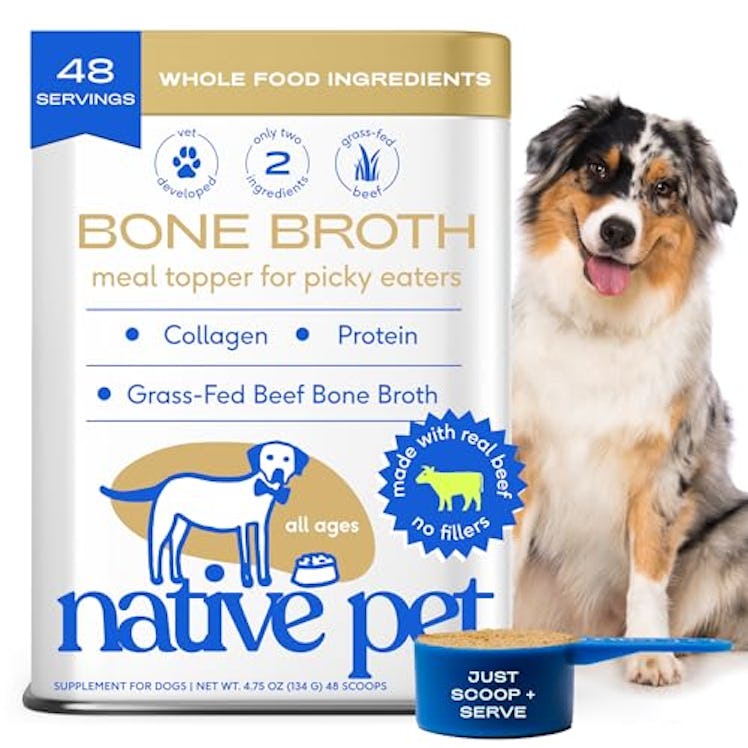
This bone broth meal topper is a great way to make sure your pup is hydrated and getting extra nutrients, as long as your vet gives the OK. Neurogan Pets veterinarian Helle Bandrup, says, “If you want to treat your dog while keeping them happy and healthy, I always suggest adding [something like] bone broth to their kibble. Dogs whose diets mostly consist of kibble are often under-hydrated.” This bone broth powder is packed with essential nutrients like collagen and protein to promote healthy joints and immune health. Since it’s in a powder form, the bone broth is easy to store — just add warm water to serve.
30Adding calming supplements for relaxation

“For oral calming support, I like Nutramax Solliquin,” says Dr. Stephanie Liff, a New York City-based veterinarian and advisor to Spot & Tango. The calming support supplement contains ingredients designed to help with balanced behavior and relaxation. Dr. Liff adds that you should still always “review any oral products with your vet before use.”
31Using interactive food games for focus

Dr. Marissa SanFilippo, a veterinarian at Small Door Veterinary, says you can use interactive feeding toys with your pet to “keep their mind active” and to “help keep dogs focused for training.” Dr. SanFilippo particularly likes the Nina Ottosson brand of dog puzzles; this option is designed to accommodate experienced dogs as well as those new to games. The puzzle feeder can hold one-third cup of treats or kibble, and since it releases things in a slow, random pattern, it’s great for slowing down fast eaters.
32Utilizing chew toys to expend pent-up energy

Wellness Pet education partner and DVM Dr. Erin Schroeder, says “For more physical energy, I like [...] durable chew toys; they give dogs an outlet for that pent-up energy in a healthy way.” If you have chewer, you should try these heavy-duty toys. Crafted from durable nylon and made to be extra sturdy, these toys are practically indestructible and can even clean your pup’s teeth. Don’t miss the dedicated slot for peanut butter or other treats.
33Rewarding your pup with high-protein treat options

Certified vet Helle Bandrup at Neurogan Pets says that high-protein treats like freeze-dried hearts are ideal because they’re packed with the muscle-building protein dogs need. You can try these freeze-dried chicken hearts with a 4.8-star average rating on Amazon. The hearts are frozen slowly to help preserve key nutrients. Of course, you should always check with your own vet before adding anything to your pup’s diet.
34Continuing to challenge their brain
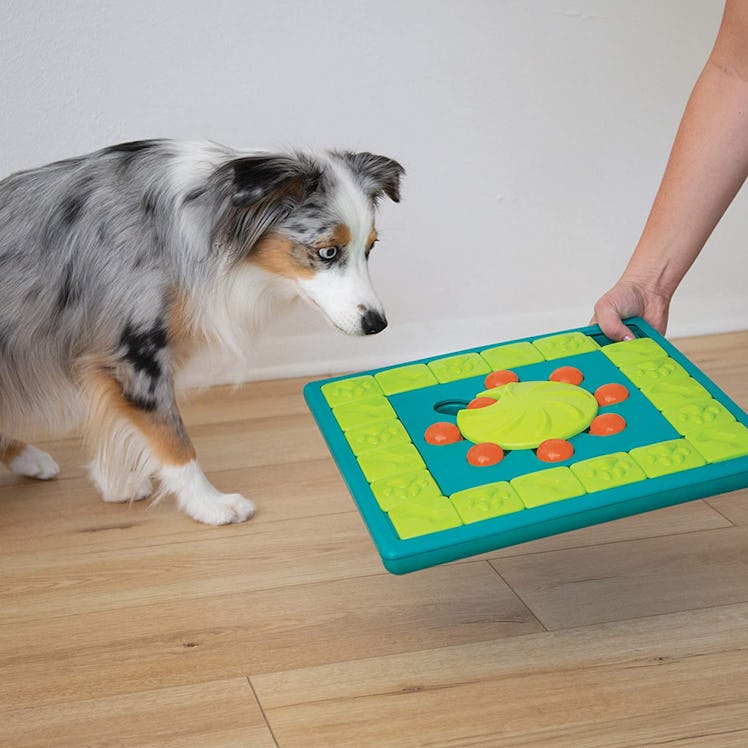
Dr. Erin Schroeder, DVM, and Wellness Pet education partner says, “I always tell pet parents to think beyond just ‘throw the ball’ and mix in toys that work both the body and the brain.” Schroeder says that puzzle toys are a great option. She explains, “They make dogs problem-solve and stay focused, which can actually tire them out faster than a long walk.” Designed for pups who already have puzzle experience, this multi-puzzle will put their knowledge to the test. It gives dogs several ways to play using sliding tiles and spinning wheels, and it holds a full cup of treats, so you can load it up for playtime.
35Utilizing a clicker to reinforce positive behaviors
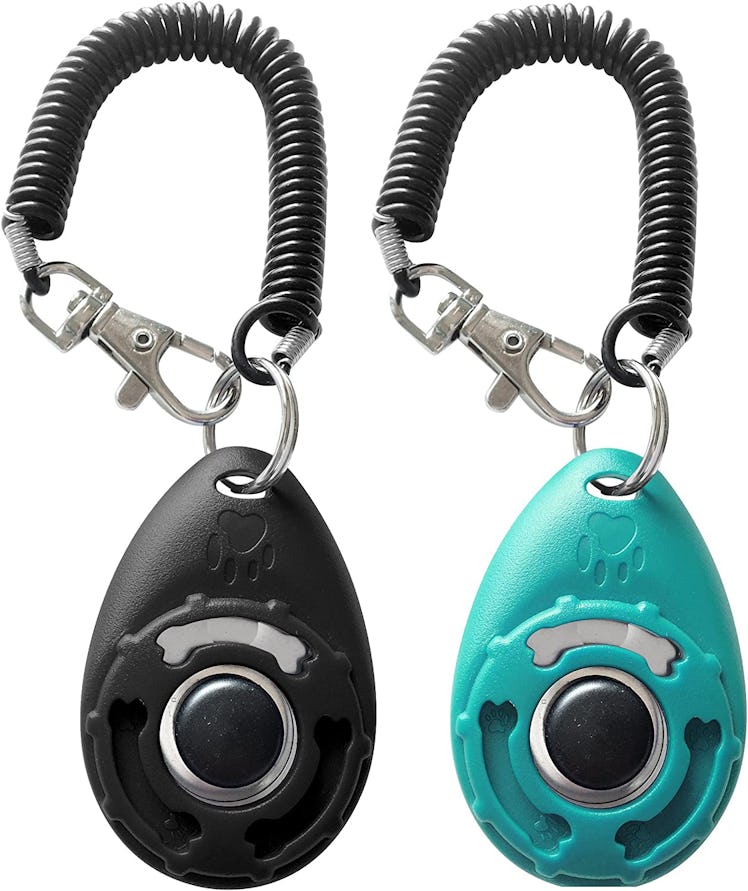
Meowoff veterinarian Iryna Smyrnova encourages pet owners to spend more time on everyday obedience skills like having your pet stay or know how to drop something. She explains, “These skills make living with your dog more enjoyable [...] they also protect you and your dog from harm.” To work on obedience, Smyrnova suggests incorporating training tools like clickers. They’re a genius way to improve communication between and your pup, since you can click to reinforce a good action. You get two clickers in the set, and they each come with a flexible wrist strap.
36Incorporating Omega-3 fatty acids for joint health

To promote joint, skin, and coat health, consider a supplement with Omega-3 fatty acids, says Meowoff veterinarian Iryna Smyrnova. This one from Dasuquin is formulated for older dogs to help with immune support, brain health, and overall skin and fur health. Just be sure to double check with your vet before adding something new to your pet’s diet.
37Using a cone to prevent irritating injuries

You can keep your dog from making any wounds or injuries worse with this head cone. Dr. Rebecca Greenstein, Veterinary Medical Advisor for Rover says that, in addition to preventing excessive wound-licking, “cones also prevent pets from bothering healing surgical sites, chewing at itchy paws, or scratching at infected, inflamed ears or eyes.” She explains that safeguarding these spots can reduce the risk of things like secondary infections, hair loss, and bleeding. This cone comes in 11 different sizes, so you can get just the right fit, and it features a hook-and-loop closure that’s designed to keep it secure. Plus, since it’s made from light PVC, the cone won’t weigh your pup down, and it’s simple to clean.
38Choosing a leather collar to reduce irritation

Dr. Ambika Vaid, integrative veterinarian and advisor to Badlands Ranch advises pet owners to look for options like leather when choosing a collar. “[Leather is] great for the skin and can prevent hair loss and skin issues that nylon collars can cause,” sats Dr. Vaid. This handmade leather collar is available in eight sizes, and each one features a double buckle and two D-rings for easy leash connection. The collar is designed to be comfortable and very durable — capable of withstanding up to 400 pounds of pulling force.
39Using a pheromone diffuser to calm down
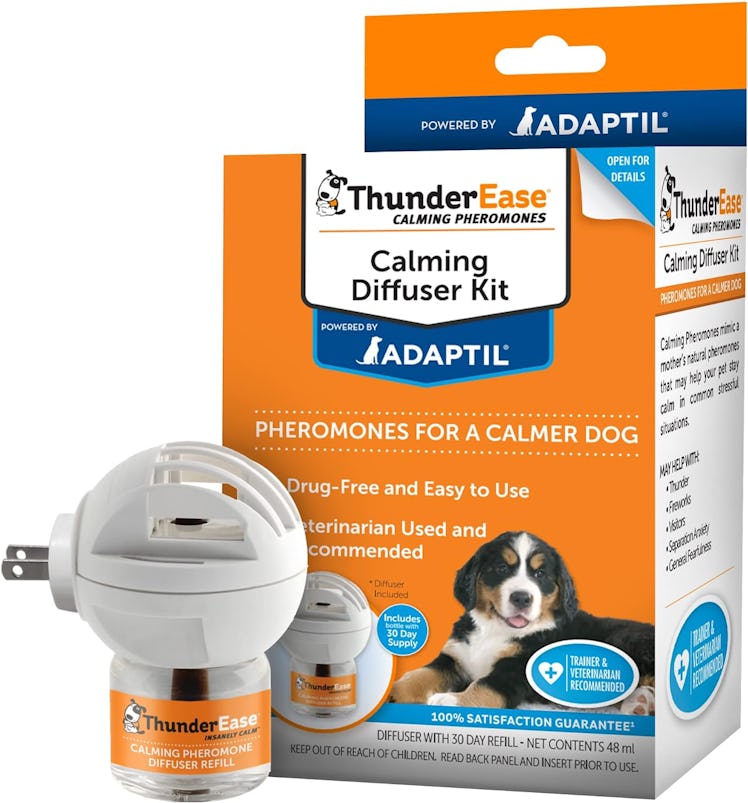
If your pup gets worked up during thunderstorms or when you have guests over, it might be time to consider a pheromone diffuser like this one. A vet for Small Door Veterinary, Dr. Marissa SanFilippo, says that using a diffuser with the Adaptil pheromone can help reduce anxiety. This particular diffuser is easy to use — just plug it in — and it’s designed not to affect humans or other pets in the home.
40Swapping dog biscuits for muscle-supporting liver treats
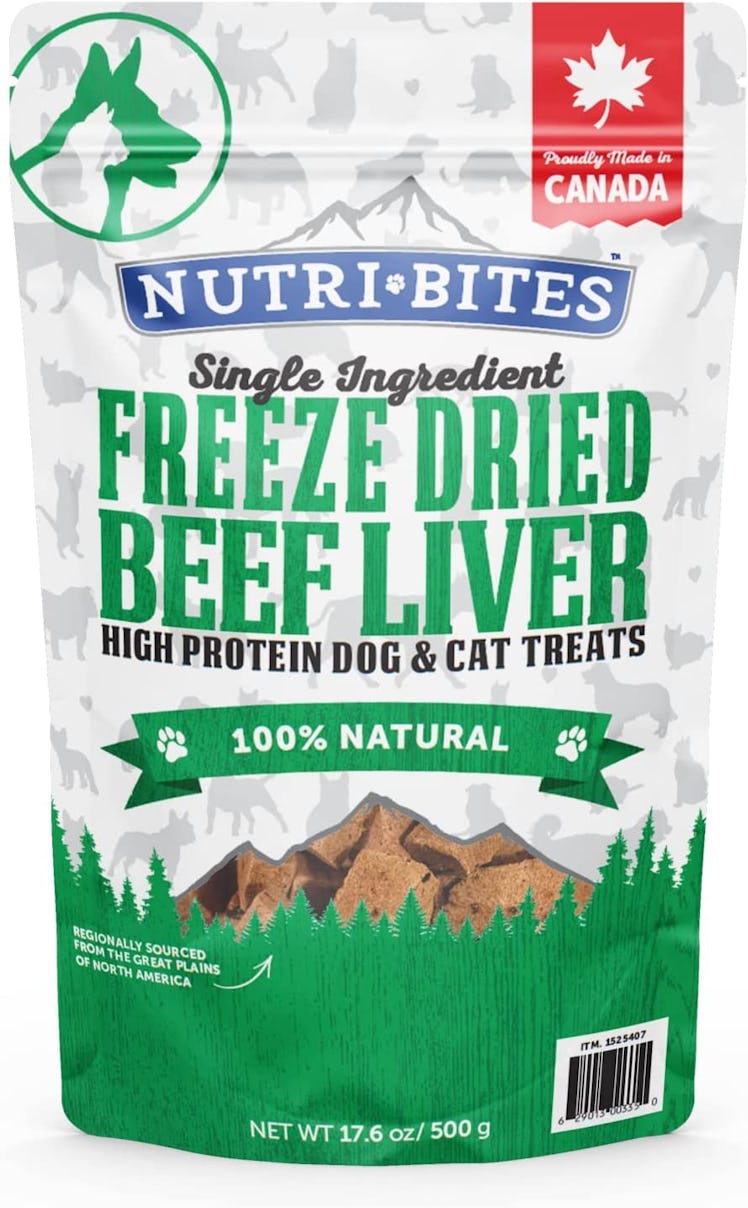
Helle Bandrup, certified vet at Neurogan Pets and business expert at Neurogan Health, advises dog owners to opt for freeze-dried liver treats instead of traditional dog biscuits. She explains, “They are packed with protein and make the perfect snack for active dogs, ensuring their muscles get the support they need.” These treats are made with only one ingredient (beef liver), and thanks to the freeze-drying process, they have a long shelf life of up to two years unopened and 30 days once opened (just reseal between feedings). But check in with your vet before making any major dietary changes.
